
Laboratorio de Análisis para la Conservación de la Biodiversidad

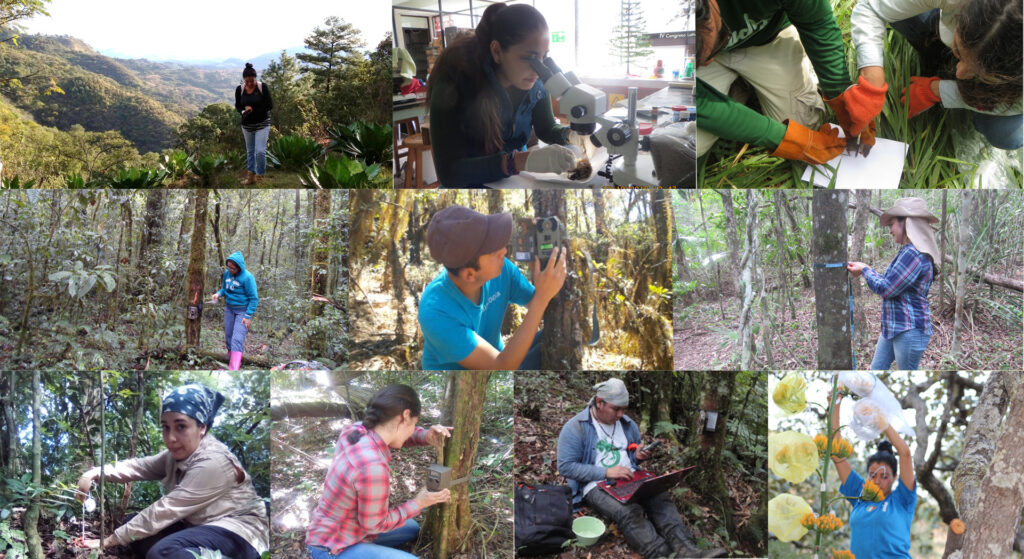
El Laboratorio de Análisis para la Conservación de la Biodiversidad (LACB) tiene como objetivo general contribuir al conocimiento, aprecio y conservación de la biodiversidad. En particular en lo relacionado con la comprensión de las consecuencias que el impacto humano tiene sobre las especies de animales silvestres y los procesos ecológicos en los que esta fauna está involucrada. La principal vía para abordar esta línea de investigación es a través del estudio de las interacciones bióticas. En estos estudios se abarca una variedad muy amplia de organismos tales como plantas, mamíferos y aves). Un sello distintivo del LACB es que busca tener un balance entre el conocimiento de historia natural y el empleo de métodos cuantitativos novedosos para abordar y resolver las preguntas de investigación. Además, en el laboratorio se le da mucha importancia a que a la par de publicar los resultados de investigación se comparta el conocimiento usando un lenguaje más accesible a través de artículos de divulgación, videos, pláticas y talleres.
Consulta aquí ejemplos de la investigación que se realiza en el LACB:


Únete al LACB
El LACB tiene siempre sus puertas abiertas para recibir estudiantes muy motivados e independientes que quieran fortalecer su formación académica a través de la realización de estudios (licenciatura/posgrado) y estancias de investigación en las líneas de trabajo que se manejan en el laboratorio.
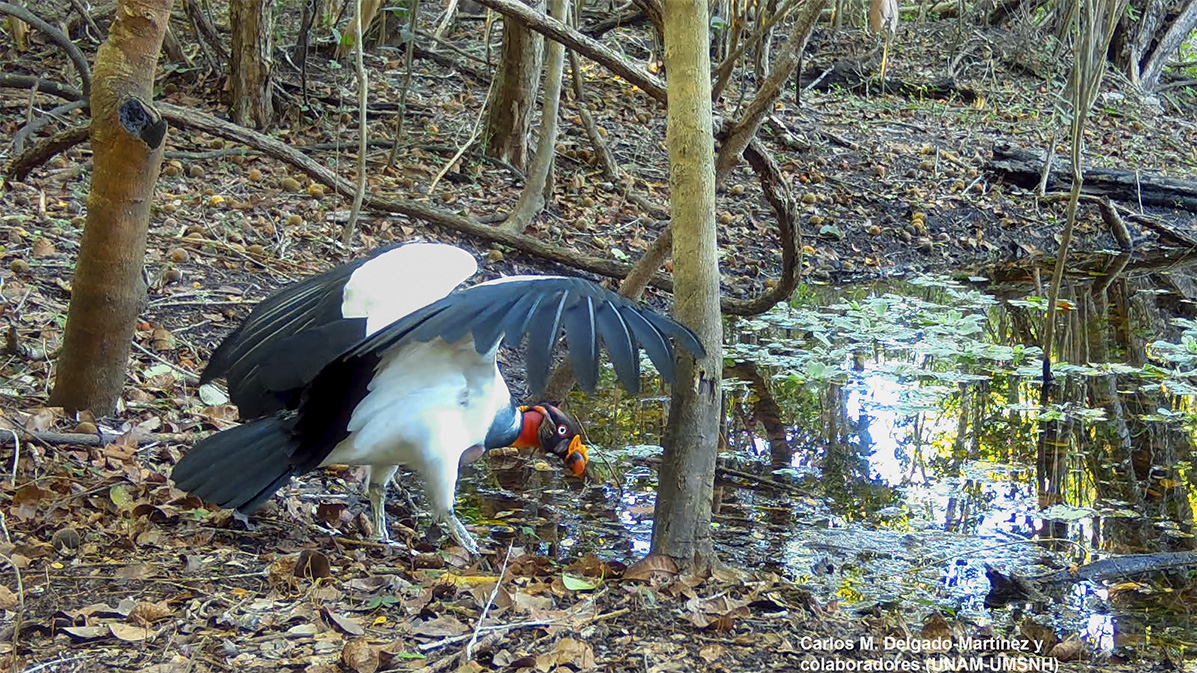
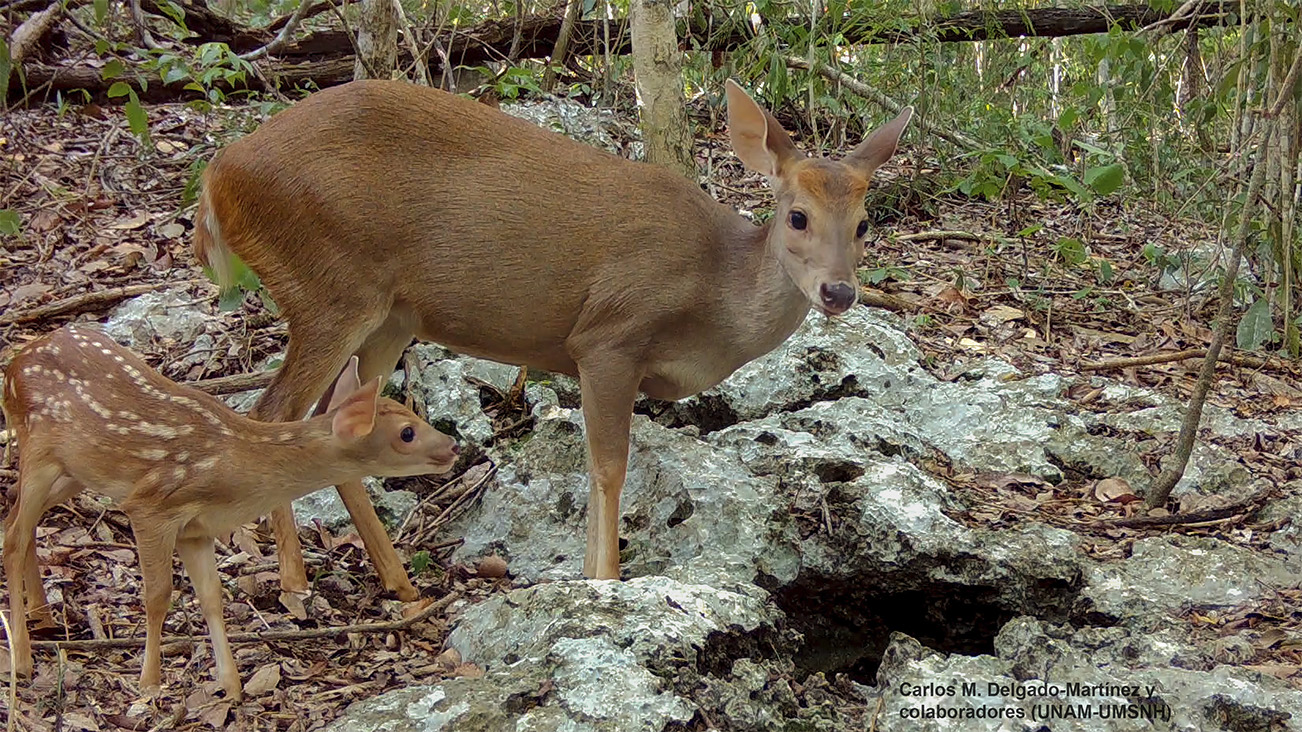
The role of water bodies in meeting the hydration needs of terrestrial vertebrates is widely recognized across ecosystems; however, predator-prey dynamics involving terrestrial vertebrates and semi-aquatic prey inhabiting water bodies remain understudied, particularly in Neotropical ecosystems. Understanding these trophic interactions can shed light on ecosystem functioning and ecological resilience. To contribute to addressing this knowledge gap, we present novel records of predation on amphibians and freshwater turtles by terrestrial vertebrates in two regions of the Yucatan Peninsula, Mexico. Data were collected via camera traps deployed between 2018 and 2024 at temporary water bodies in seasonally dry tropical forests. We documented 20 predation events involving mammals such as ocelots (Leopardus pardalis), raccoons (Procyon lotor), and tayras (Eira barbara), as well as raptors like the Great Black Hawk (Buteogallus urubitinga) and the Roadside Hawk (Rupornis magnirostris). In all cases, predators used their forelimbs or talons to capture and manipulate prey from shallow water, targeting anurans and Kinosternon turtles. These observations suggest that temporary water bodies serve as valuable and predictable foraging sites by concentrating semi-aquatic prey available for terrestrial predators. Our findings highlight the ecological importance of temporary aquatic habitats in supporting trophic interactions and maintaining ecosystem function within seasonally dry tropical forests.

Increasing temporal and spatial coverage of bird inventories is urgent in changing tropical ecosystems. Camera trapping, traditionally focused on surveying mammals, has been pointed out as a potential tool to complement standard bird surveys. However, few standard bird surveys and camera trapping comparisons have been made in tropical biodiversity hotspots. We conducted camera trapping and point count surveys of bird species in eighteen 1 km2 landscape units along a deforestation gradient in the Lacandon forest in México. We compared the two methods based on the estimates they produced of bird species richness, composition, body mass, and conservation status. We recorded 2.6 times more species by point counts than by camera trapping. There was no correlation between the number of species recorded by the two methods, and the similarity in species composition was low. Body mass was higher in species recorded by camera trapping only in medium levels of deforestation. Camera trapping has little potential to replace standard bird survey methods, such as point counts, for documenting bird species diversity. However, in some circumstances, it can be a valuable tool to help document the presence of some bird species by monitoring them throughout the day.

Cuando escuchas la palabra roedor, ¿piensas en un ratoncito corriendo por la cocina? ¡Pues prepárate para sorprenderte! El mundo de los roedores es mucho más diverso de lo que imaginas. Hay algunos ¡tan grandes como un perro pequeño! y con apariencia y hábitos curiosos.


